The message looked official.
A pop-up, a text, or an email, made to look as if it came from a bank or a tech company, told older Americans that something was wrong with their accounts. Some were told they had been charged. Others were told they had been refunded too much, and that they needed to send the extra money back.
Then came the phone number to call, and the instructions to move their money, the U.S. Attorney’s Office for the District of Arizona said.
The Man Who Moved the Money
Ivan Wilbur Seales, 58, a New York resident and a citizen of Saint Vincent and the Grenadines, was the one prosecutors said helped wash the proceeds.
On November 6, 2026, U.S. District Judge Scott H. Rash in Tucson sentenced him to 121 months in federal prison, more than 10 years, after a jury found him guilty of conspiracy to commit money laundering. He was also ordered to pay about $855,000 in restitution to victims, the U.S. Attorney’s Office said in a November 10 announcement.
Prosecutors said Seales laundered nearly $1 million for a fraud network that targeted elderly people around the country, including in Arizona. He kept a portion of the money and moved the rest through shell companies, cryptocurrency transfers, cash withdrawals and other transfers overseas, the office said.
How the Hook Worked
According to the U.S. Attorney’s Office, the scams started with phishing attacks: pop-ups and websites made to look like trusted banks and tech companies. Victims were told to call people who claimed to represent firms such as Apple or Microsoft.
Some victims got an email or a text saying they had been charged by Geek Squad, PayPal or an antivirus company. Those charges had not happened, prosecutors said. They were bait, sent to get the person to call.
Once victims were on the line, they were told that a “legitimate” company had put an “over-refunded” amount into their bank accounts, the office said. They were then instructed to transfer their own money back, believing they were returning the extra. Others were told their accounts had been hacked, or that they needed to move their money to “protect” it or to help “catch” the scammers. At least one victim was told his account was linked to child pornography, the office said.
Two Arizona Losses
KTAR reported that at least two of the victims were in Arizona. One person in Pima County mailed Seales a $185,000 cashier’s check in February 2023, the station reported, then wired more than $220,000 to other companies in response to fake invoices. A victim in Sierra Vista received a fake Apple support warning and sent money to Seales through Zelle, KTAR reported.
The U.S. Postal Inspection Service and the New York State Police investigated the case, the U.S. Attorney’s Office said.
What Happened After the Arrest
KTAR, citing court filings, reported that Seales was arrested in February 2023 and agreed to help investigators. The same filings, the station reported, show he kept messaging a contact in the scam network and asking for a cut of roughly $500,000 a month in stolen funds. Seales said he was keeping the line open for police. Arizona detectives told him to stop trying to “commit a crime to solve a crime,” KTAR reported.
Courtroom Insider, citing court records, reported that a jury convicted Seales on April 7 after a six-day trial, and that his sentencing had first been set for July 18 before it was moved to November.
Coverage of the sentencing did not include a statement from Seales or his attorney, other than the claim, described in those court filings, that he was still in contact with the network to help the police. KTAR reported that he has already appealed the conviction.
A pop-up or a text that tells you to call a number, then send money back, is a warning sign, not a refund. Hang up and use a phone number or a website you already trust.
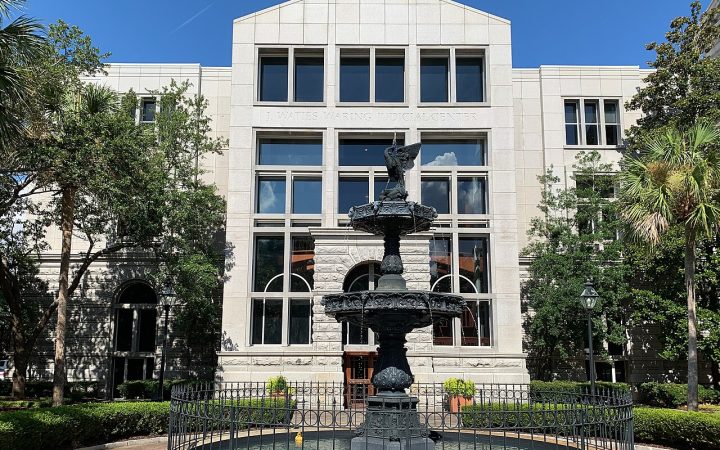
Photo: The federal building at 300 West Congress Street in Tucson, Arizona, near the city’s federal court complex, with “A” Mountain in the distance. Photo by Daquella manera, CC BY 2.0, via Wikimedia Commons.
Sources
- U.S. Attorney’s Office, District of Arizona (November 10, 2026): justice.gov
- KTAR (David Iversen, November 11, 2026): ktar.com
- Courtroom Insider (Trey Baylor, November 18, 2026): courtroominsider.com