The invoices kept coming in.
Travel. Hotels. Dinners. Legal services. They were billed to a well known personal injury firm in South Carolina, and many of the costs were taken out of the money clients were supposed to receive from their cases.
For years, the firm paid them.
Then, in March 2024, someone tried to cash a check. The firm’s own review started there, The Post and Courier reported, citing court filings. What investigators later described stretched back more than five years.
The Lawyer Inside the Firm
The man behind the paperwork was William Christopher Swett, 42, of Johns Island, South Carolina. He was a personal injury lawyer at Motley Rice, a national firm based in Mount Pleasant and known for asbestos, tobacco and other complex cases.
The U.S. Attorney’s Office for the District of South Carolina said Swett spent more than five years defrauding his employer and his clients of more than $2 million.
What the Paperwork Concealed
According to the U.S. Attorney’s Office, Swett set up two companies that were presented as legitimate legal services firms and used them to send expense reimbursements back to himself. He also filed sham personal injury claims for family members, then moved the money into bank accounts he controlled, prosecutors said.
And he submitted invoices for travel, hotel and dining expenses, including bills tied to more than a dozen fake clients. The firm often absorbed some of those costs. Most of them, prosecutors said, were passed on to vulnerable clients and deducted from their settlement funds. The scheme reached dozens of clients, The Post and Courier reported, citing prosecutors.
Live 5 News, citing prosecutors, reported that he also fabricated death and injury claims, falsified medical records, and hid his ties to the companies from the firm and the people he represented.
How It Came Apart
The Post and Courier reported that a March 2024 attempt to cash a fraudulent check set off Motley Rice’s internal investigation. Partners then spent about 10,000 hours tracing the harm and reviewing every case Swett had handled, Ann Rice Ervin, a partner at the firm and the daughter of co-founder Joe Rice, told the court, according to Live 5 News and The Post and Courier. The newspaper put his time at the firm at 11 years. The ABA Journal, citing Reuters, said he had been a lawyer there for 12 years.
The FBI’s Columbia Field Office took up the criminal case. Swett’s law license was suspended by the South Carolina Supreme Court in May 2024, Live 5 News reported.
The Letter in the Courtroom
On November 16, 2026, U.S. District Judge Richard M. Gergel sentenced Swett in the J. Waties Waring Judicial Center in Charleston to 87 months in federal prison, more than seven years, followed by three years of supervision. He was also ordered to pay over $2.5 million in restitution.
Joe Rice died on September 3, The Post and Courier reported, shortly before the hearing. Before his death he wrote a statement that would have been his first appearance in the case as a victim. His daughter read it in court. She turned to Swett and delivered her father’s words: “Chris, I trusted you.”
U.S. Attorney Bryan Stirling said one victim he wanted remembered was Joe Rice. “He built that firm from nothing. He put his trust in the defendant, and that defendant took that trust and just threw it in the garbage,” Stirling said, according to Live 5 News. In the government’s announcement, Stirling said Swett “abused his position of trust that he held with both his law firm and his clients.”
All of the people affected have been repaid with interest by Motley Rice, officials told The Post and Courier.
What He Said, and Where the Money Went
Swett pleaded guilty to four counts of wire fraud and four counts of money laundering. Live 5 News and the ABA Journal, citing Reuters, reported that the plea came in February. The Post and Courier later gave the date as March 19.
In court, Swett said working at Motley Rice had been his dream job and that he had given the legal profession “another black eye,” The Post and Courier reported. He said he knew the choices were wrong. His lawyer, Nathan Williams, said Swett had a severe gambling addiction and substance abuse issues, according to court papers described by Reuters and the ABA Journal. “Once it became clear to him that he couldn’t keep living that way, he took accountability,” Williams said. In court, Williams put it more bluntly, according to The Post and Courier: Swett “gambled his money away.”
Gergel had planned a longer sentence, then said he was impressed by Swett’s remorse and stayed at the bottom of the federal guidelines, Live 5 News and The Post and Courier reported. “This sentence should send a strong message to members of the bar: if you break the law, you will be held accountable,” Stirling said.
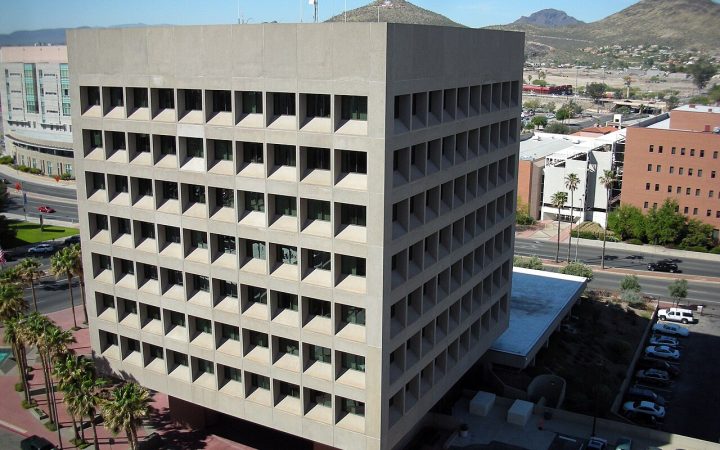
Photo: The Meeting Street facade of the J. Waties Waring Judicial Center in Charleston, South Carolina, the federal courthouse where William Christopher Swett was sentenced. Photo by ProfReader, CC BY-SA 4.0, via Wikimedia Commons.
Sources
- U.S. Attorney’s Office, District of South Carolina (November 17, 2026): justice.gov
- The Post and Courier (Caitlin Bell, November 16, 2026): postandcourier.com
- Live 5 News / WCSC (November 16, 2026): live5news.com
- ABA Journal (November 18, 2026), citing Reuters: abajournal.com