



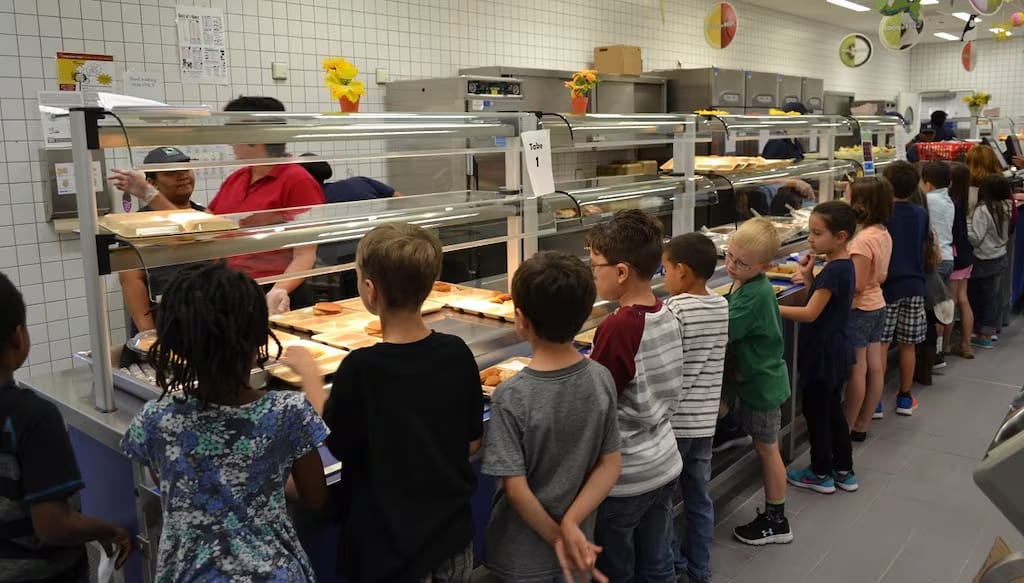
There’s a 25-cent increase coming to school meals at Department of Defense schools overseas for the 2026–2027 school year. On paper, it’s minor. A quarter. Not exactly the stuff of budget showdowns.
Lunch for pre-K through fifth grade will rise to $3.75. Middle and high school students will pay $4. Breakfast for all grades will be $2.25. It’s the first increase in four years.
Families who qualify under federal guidelines will still receive free meals. Reduced-price meals remain 40 cents for lunch and 30 cents for breakfast.
So no, this isn’t catastrophic.
But it does expose something larger.
Why are the children of active-duty service members stationed overseas paying anything at all for school meals?
According to the Army and Air Force Exchange Service, the average lunch costs about $5.50 to produce. Students pay roughly $2 less than that amount, with the Department of Defense Education Activity and the U.S. Department of Agriculture reimbursing the rest. By law, DoDEA schools must adjust prices to align with USDA reimbursement benchmarks.
That’s the administrative explanation.
The political explanation is about priorities — and how years of immigration policies championed by Democratic leadership created massive new federal spending commitments that are still baked into today’s budget.
It's the first increase in school lunch prices in four years. https://t.co/lGjpsPqUOR
— Military Times (@MilitaryTimes) February 25, 2026
Over the past several years, billions have been directed toward housing assistance, healthcare programs, food benefits, legal services, and emergency funding tied to the migrant surge at the southern border. Sanctuary jurisdictions — overwhelmingly led by Democrats — publicly committed taxpayer dollars to support individuals who entered the country unlawfully.
Those weren’t small pilot programs. They were structural spending decisions. Multi-billion-dollar obligations.
And those obligations don’t disappear just because the political winds shift.
Meanwhile, in 2025 alone, AAFES provided 3.6 million meals across more than 70 schools in Europe and the Pacific. This isn’t an open-ended entitlement. It’s a defined population: the sons and daughters of Americans serving overseas.
These families didn’t move for a promotion. They didn’t chase opportunity abroad. They go where they’re ordered. They absorb deployment cycles, language barriers, foreign cost-of-living swings, and constant transitions. Junior enlisted households especially feel every incremental cost increase.
If Washington can sustain billions in ongoing migrant-related expenditures created under prior leadership, it can certainly absorb the relatively modest cost of eliminating lunch fees for military dependents overseas.
This isn’t about punishing anyone. It’s about ranking obligations correctly.
A nation’s first responsibility is to its citizens — particularly those defending it.
During the pandemic, meals were provided free of charge for two years through grab-and-go distribution. Parents didn’t pay. The system absorbed the expense. The mission continued.
The meals meet USDA nutrition standards — whole grains, fresh fruits and vegetables, lean proteins, milk. This isn’t excess spending. It’s baseline nutrition.
A 25-cent increase won’t break most families. But the symbolism matters.
When the federal government carries forward massive spending commitments tied to unlawful immigration while military children overseas are still swiping a card in the lunch line, it sends a message — whether intended or not.
Budgets reveal values.
If there is room in the federal ledger for policies built around accommodating illegal entry, there is room to fully fund meals for the children of service members stationed abroad.
Source: Military Times