




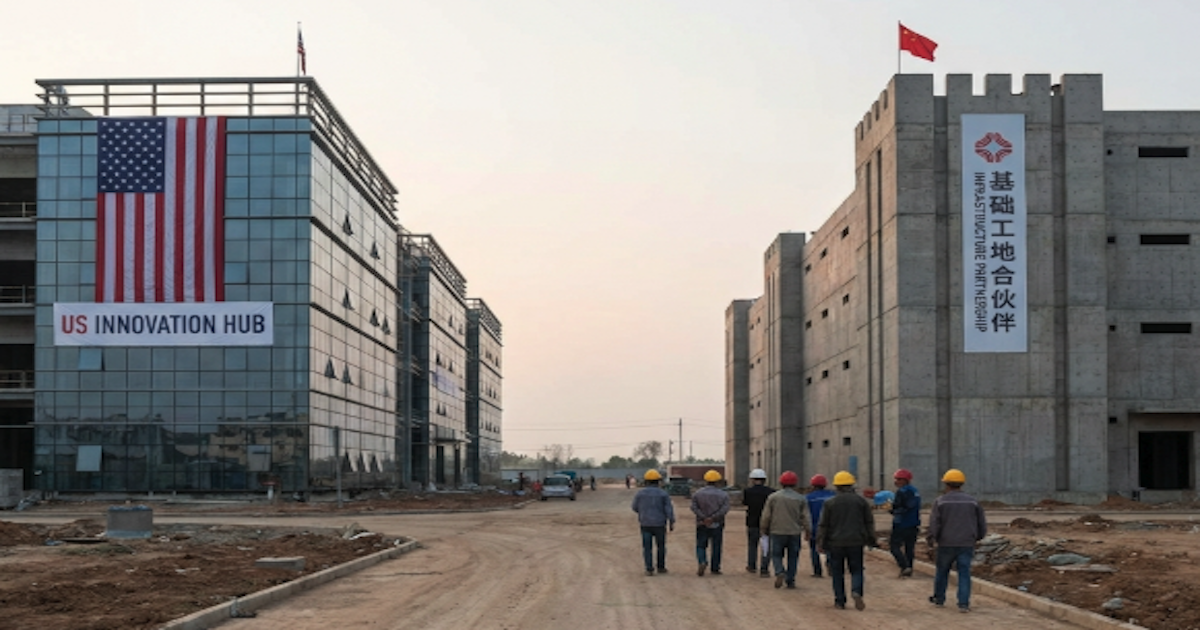
The real AI battle isn't what you think.
Most founders are watching the wrong scoreboard. We obsess over raw innovation speeds and chat model updates coming out of Silicon Valley. Meanwhile, China is playing a completely different game.
Their strategy isn't just about building better tech. It's about exporting infrastructure. They are offering nations a "turnkey" path to sovereign AI clouds, allowing foreign governments to run software on their own turf, keeping data and chips within their borders.
It sounds appealing to developing nations. But here is the catch. These "open-weight" models are built on Chinese architecture. They amplify state narratives and exhibit deliberate vulnerabilities. While American labs focus on the next breakthrough, Beijing is focused on distribution and dependency.
We need to wake up.
The real AI battle isn't what you think.
— Evelio Silvera (@eveliosilvera) March 6, 2026
Most founders are watching the wrong scoreboard.
We obsess over raw innovation speeds and chat model updates coming out of Silicon Valley.
Meanwhile, China is playing a completely different game.
Their strategy isn't just about… pic.twitter.com/jPuZklXdzX
The nation that sets the standards sets the future. If we suffocate our own innovation with excessive federal micromanagement, we drive research offshore. We hand our competitors a gift.
The solution isn't more red tape. It is American dynamism. We need a light-touch framework that sets sensible guardrails without killing the engine of growth. The future of AI must be built on values of freedom, not control.
For purpose-driven founders, this matters. We operate in a reality where technology is never neutral. It always carries the values of its architect. We need to ensure the architecture of the future is built on liberty.
Dependency is a silent killer of sovereignty. Build on foundations that respect freedom.