




Patriot Brief
• What Happened: Veteran unemployment fell to 4.1% in February, even as national unemployment rose to 4.4% and employers cut 92,000 jobs, including losses in manufacturing.
• Why It Matters: Veterans are outperforming the broader workforce during a cooling labor market, highlighting employer demand for military skills despite economic uncertainty and geopolitical tension.
• Bottom Line: While the economy shows strain, veterans continue finding work — a sign of resilience as broader hiring slows.
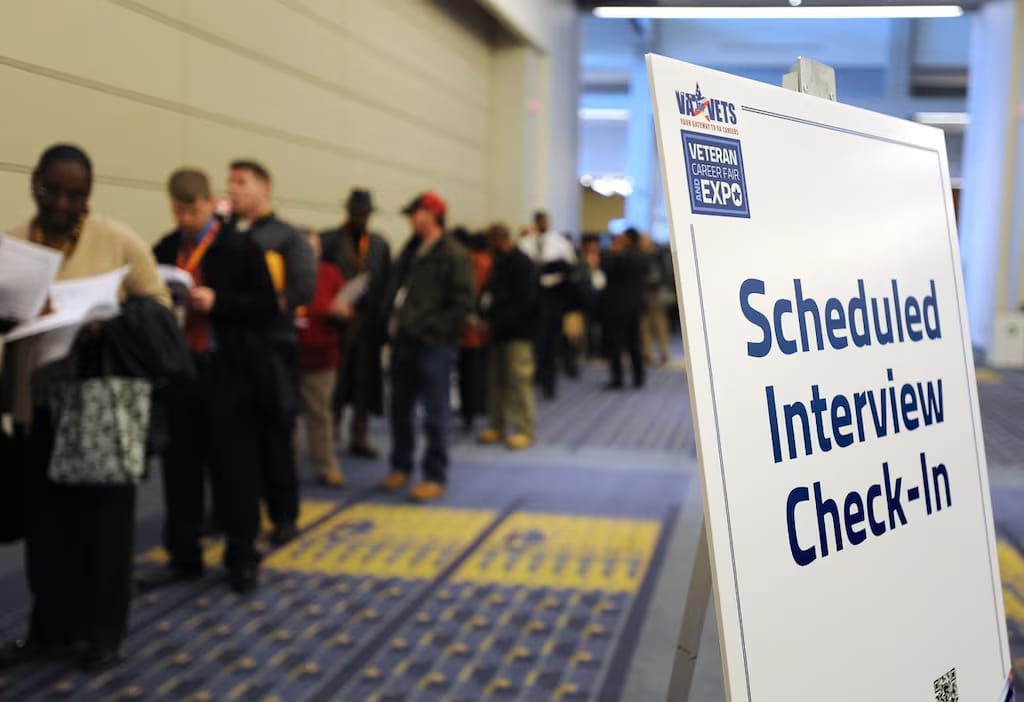
The unemployment rate for U.S. veterans declined in February, even as the broader labor market showed signs of weakness, according to the latest monthly report from the Bureau of Labor Statistics.
The BLS reported that the unemployment rate for all veterans fell from 4.5% in January to 4.1% in February. Among post-9/11 veterans, the improvement was even more noticeable. Their unemployment rate dropped from 5.8% in January to 4.8% in February.
The improvement for veterans came during a month when the overall unemployment rate for the general population increased slightly. The national unemployment rate rose from 4.3% to 4.4% in February.
The shift reflects a broader slowdown in hiring. Employers eliminated roughly 92,000 jobs during the month, according to the BLS report.
Manufacturing experienced some of the most notable losses. The sector shed 12,000 jobs in February and has lost about 90,000 jobs so far in 2025. Those losses come despite continued policy discussions in Washington about strengthening domestic manufacturing and encouraging companies to bring production back to the United States.
The February jobs report was based largely on data compiled by mid-month, which is standard for the Bureau of Labor Statistics. Because of that timing, the report does not yet reflect the potential economic impact of the conflict that began with Iran on Feb. 28, including rising oil prices and market volatility.
Labor Secretary Lori Chavez-DeRemer addressed the report by expressing optimism about future job growth.
“I’m optimistic that job growth will continue as we undo the Biden-era catastrophe of soaring prices and stagnant wages,” Chavez-DeRemer said in a statement.
White House National Economic Council Director Kevin Hassett also commented on the report, saying the results were somewhat surprising given other economic indicators.
Speaking to CNBC, Hassett said the overall economy remains strong and suggested that temporary factors such as winter storms and labor strikes along the West Coast may have influenced February’s numbers.
Despite the broader job losses, organizations that work with veterans say employers continue to actively seek out former service members.
Kevin Rasch, regional director for the Warriors to Work program at the Wounded Warrior Project, said many companies now recognize the reliability, discipline and leadership skills veterans bring to the workplace.
Veteran unemployment has generally remained within the 3% to 5% range in recent years, which Rasch described as a solid place for the community.
However, economists warn that growing uncertainty tied to the conflict in the Middle East could make companies more cautious about hiring in the coming months.
For now, the February data shows a mixed picture: veterans are seeing improved employment numbers, while the broader labor market is beginning to show signs of strain.