



- What Happened: A biological male identifying as "Emily" walked into Cinderella dress shop at Wheaton Mall in Maryland and demanded a job. When told only women are hired for roles involving women's dress fittings, he posted a public threat on social media.
- Why It Matters: The EEOC just ruled this week that biological sex is immutable and employers may maintain sex-specific roles in intimate settings. Cinderella did exactly what the law now protects.
- Bottom Line: A women's dress shop said women only. One man didn't like the answer. The shop has nothing to apologize for.
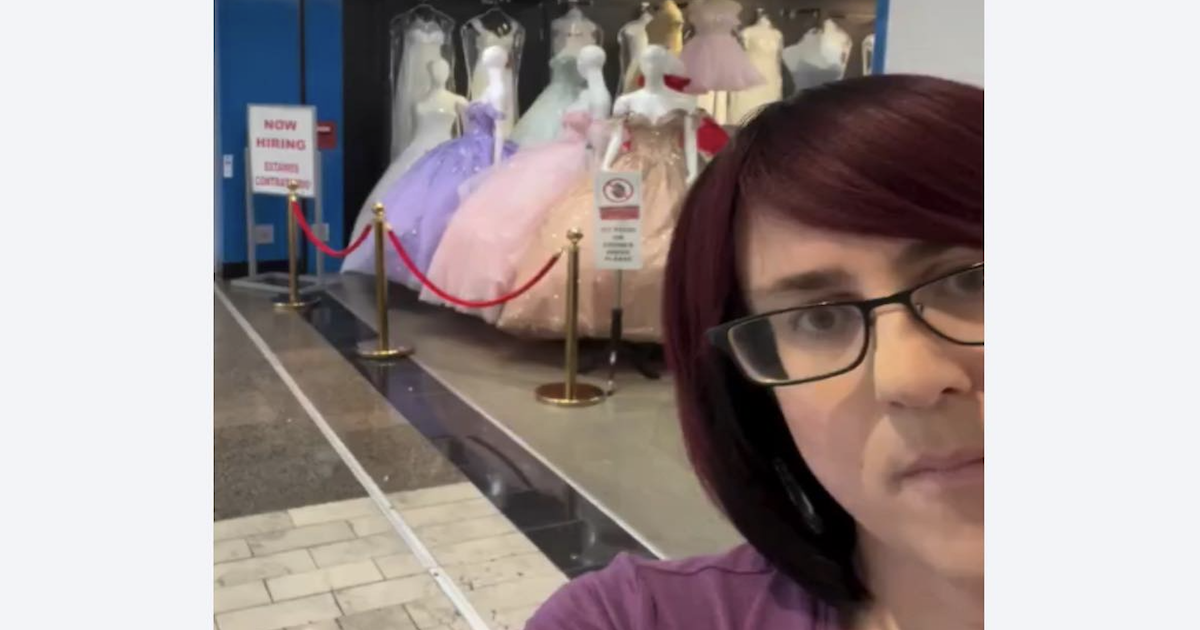
A biological male who identifies as "Emily" walked into the Cinderella dress shop at Wheaton Mall in Wheaton, Maryland this week, saw a hiring sign in the window, and asked for a job. He was told no. The reason was simple and entirely legal: only women work there.
That was not the end of it.
The individual posted a video on social media announcing that the store is "on notice." Standing outside the mall location, he addressed the camera directly. "Despite this store being hiring, they have beautiful dresses, I just went in and asked if I could be hired, and they told me that I couldn't because I'm not a woman, and only a woman can work at that job. So, Cinderella, in the Wheaton Mall, you're on notice."
Man goes to dress shop.
— James Dreyfus (@DreyfusJames) March 9, 2026
Applies for a job, that’ll require him to fit these dresses onto half-naked women & girls.
A job that he knows he’ll get rejected from.
And, sure enough, he is told “No. This job is for women only.”
Man says about shop “You’re on notice”…
🤔 pic.twitter.com/J8AanBFjiB
The timing could not be more legally significant for the store. Just this week, the U.S. Equal Employment Opportunity Commission issued a landmark ruling in Selina S. v. Driscoll, concluding that biological sex is an immutable characteristic and that employers may maintain sex-specific roles and spaces in intimate settings. The ruling stated plainly that a man who identifies as a woman is still a man, and that separating men and women in settings involving privacy and intimate contact is not discriminatory under Title VII of the Civil Rights Act.
This man who calls himself ‘Emily’ is upset because he was rejected for a job at a women’s dress shop where the requirements include dress fittings for women and girls.
— Gary M (@gman5180) March 10, 2026
He says..
“I just went in and asked if I could be hired and they told me I couldn’t because I’m NOT a woman.”… pic.twitter.com/I1ZxycBNnB
A women's dress shop where employees assist women and girls with fittings is precisely the kind of intimate, sex-specific workplace the ruling was designed to protect.
Cinderella serves brides, prom attendees, quinceañera celebrants, and young girls shopping with their mothers. The nature of that work requires female employees in fitting rooms and during intimate dress consultations. The store's policy is not bigotry. It is common sense, now backed explicitly by federal legal authority.
The activist's response to a lawful, reasonable hiring decision was to post a public threat against a small business. That is the playbook. A private company makes a common sense call, and the answer from the activist left is intimidation dressed up as civil rights.
Cinderella did not discriminate. They hired for the job. And the job requires a woman.