


- What Happened: Elon Musk officially launched Terafab on March 21, a $20-25 billion joint chip manufacturing venture between Tesla, SpaceX, and xAI to be built in Austin, targeting one terawatt of AI compute annually.
- Why It Matters: Current global AI chip output is roughly 20 gigawatts per year. Terafab's target would represent roughly 50 times that. Musk says his companies' future needs dwarf everything the global supply chain can currently produce.
- Bottom Line: When the largest AI chip buyer on the planet says the global supply chain isn't enough, it is time to pay attention.
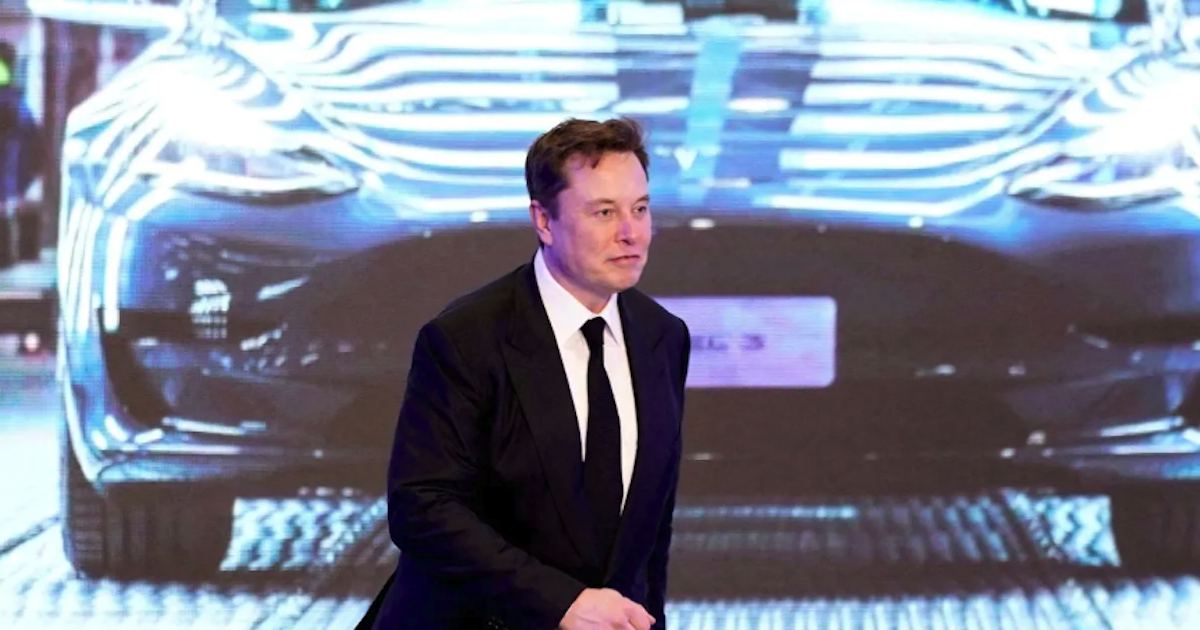
On the night of March 21, Elon Musk walked onto the stage at Austin's historic Seaholm Power Plant, light beams shooting into the Texas sky behind him, and announced the most ambitious semiconductor project in private history.
Terafab.
"We either build the Terafab or we don't have the chips," Musk said. "And we need the chips, so we build the Terafab."
Elon Musk just announced Tesla and SpaceX will build their own advanced chip manufacturing facility in Austin. He's calling it "Terafab."
— Evelio Silvera (@eveliosilvera) March 25, 2026
Two fabs. One producing AI chips for Tesla's vehicles and Optimus robots. One producing hardened AI chips for SpaceX's space-based data… pic.twitter.com/uBaCvRpKv5
Terafab is a joint venture between Tesla, SpaceX, and xAI, which SpaceX acquired in an all-stock deal in February. The facility will be built on the North Campus of Giga Texas, adjacent to Tesla's existing Austin manufacturing base. The cost estimate runs between $20 and $25 billion. Texas Governor Greg Abbott was in the audience. "Thanks Elon. Extraordinary event tonight," Abbott posted on X afterward. "Your vision is powerful and we are proud of all you do in Texas."
The scale of the ambition is almost impossible to process. Current global AI compute output is roughly 20 gigawatts per year. Terafab's stated target is one terawatt annually, roughly 50 times current global output. Musk said all existing fabrication facilities on Earth produce only about 2% of what his companies will eventually need across AI, robotics, and space computing.
TERAFAB unveiled. $20–25B. Not a side project.
— Mario Nawfal (@MarioNawfal) March 24, 2026
A trillion watts of compute per year. Yes, trillion. Matching the U.S. electricity grid’s output.
AI data centers in orbit. Robotaxis. Optimus.
When the grid caps out, you go to space.@Tesla @SpaceX @xAI https://t.co/Vh3YCQoOca pic.twitter.com/8CWPXWq0XU
The facility will consolidate every stage of semiconductor production under one roof. Chip design, lithography, fabrication, memory production, advanced packaging, and testing. It will target 2-nanometer process technology, the most advanced node currently entering commercial production. Two distinct chip families will come out of it. Terrestrial inference chips for Tesla vehicles, the Cybercab robotaxi, and Optimus humanoid robots. And D3 chips, radiation-hardened processors custom designed to operate in the extreme conditions of orbital space for SpaceX's planned network of AI satellites.
Musk was careful to acknowledge his current suppliers. "We're very grateful to our existing supply chain, to Samsung, TSMC, Micron and others," he said. "But there's a maximum rate at which they're comfortable expanding. That rate is much less than we would like."
🚨BREAKING: ELON MUSK ANNOUNCES TERAFAB – ADVANCED CHIP FAB IN AUSTIN WITH FULL IN-HOUSE LOOP 🇺🇸 $TSLA
— Tsla Archive (@tesla_archive) March 22, 2026
✅ Announcement
• Elon Musk officially announced the start of the TERAFAB project in Austin, Texas
• Thanked Texas Governor Greg Abbott and the state for their support
✅… https://t.co/OYC0cVcYtI pic.twitter.com/kAc0AbxNbc
There it is. The largest buyer of AI chips on the planet just told the global semiconductor supply chain it cannot keep up. That is not a minor complaint. That is a structural verdict that every company competing for the same chips, Nvidia, Microsoft, Google, Amazon, Meta, should be reading very carefully.
This is how transformative technology always moves. First you buy it. Then you cannot buy enough. Then you build it yourself. Tesla did it with batteries. SpaceX did it with rockets. Now Musk is doing it with chips.
Musk gave no construction timeline. He has a documented history of ambitious announcements followed by delays. Tesla's CFO confirmed at the event that the full Terafab cost is not yet incorporated into Tesla's 2026 capital expenditure plan, which already exceeds $20 billion on its own. Whether Terafab delivers on its staggering targets on schedule remains to be seen.
Elon just announced the most ambitious manufacturing project since the Manhattan Project.
— sui ☄️ (@birdabo) March 22, 2026
tesla and spaceX are building TERAFAB. a semiconductor fab in Austin that produces over a terawatt of compute per year. 100 to 200 billion AI chips annually. 2nm process with around $25… https://t.co/9a3LDLaQGg
But the announcement itself is significant regardless of timeline. Musk is signaling that the AI compute supply chain is broken for anyone operating at the scale he is operating at, and that the only solution is vertical integration. The companies that control their own AI infrastructure will have a structural advantage over those still waiting in line.
That is true for trillion-dollar enterprises. It is also true for every company in America figuring out its AI strategy right now.