




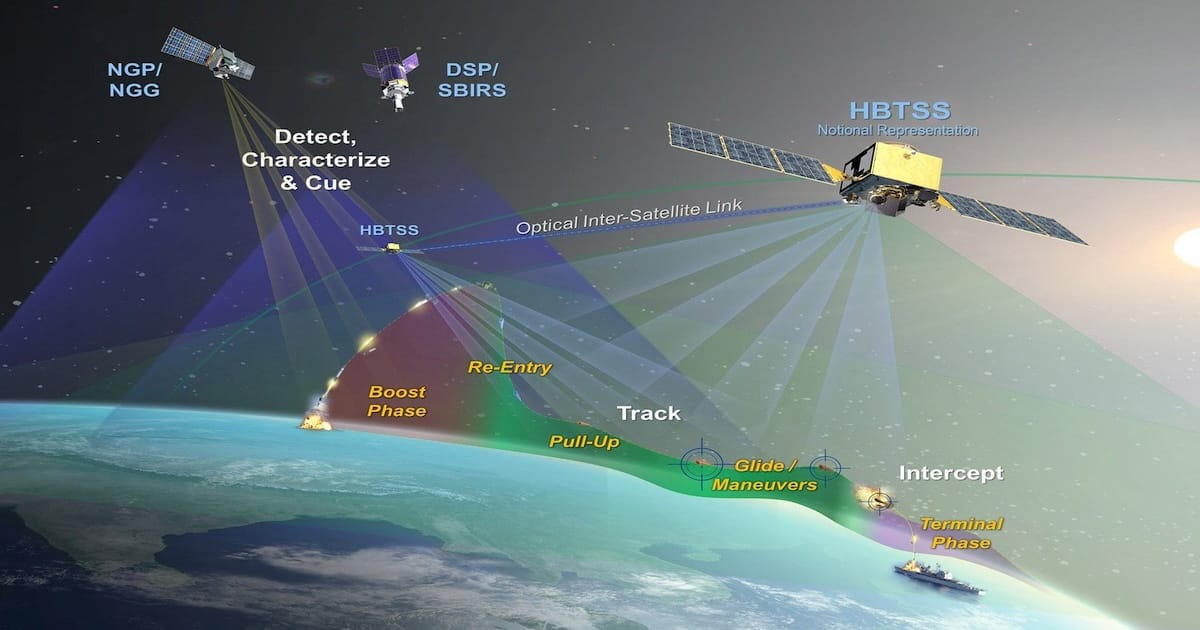
- What Happened: The U.S. military has activated a real-time "sensor-to-shooter" network in Operation Epic Fury, linking satellites directly to F-35s to detect and destroy Iranian missile launchers within minutes of detection.
- Why It Matters: Iran cannot hide, move, or survive long enough to reload. The moment a launcher powers up, satellites see the heat signature and the strike is already in the air.
- Bottom Line: A weapons system that existed only in Pentagon planning documents is now evaporating Iran's entire missile architecture in real time.
For years it lived in classified briefings and Pentagon PowerPoint slides. Now it is live, it is lethal, and Iran is finding out the hard way.
The United States military has activated what defense analysts are calling a sensor-to-shooter network during Operation Epic Fury, a targeting architecture that links space-based surveillance satellites directly to F-35 strike fighters in real time. The result is a kill chain so fast that Iranian missile crews do not have time to fire, relocate, or survive.
🚨🇺🇸🇮🇷 The U.S. just activated a weapons system that existed only in Pentagon PowerPoints until now: the “sensor-shooter” network.
— Mario Nawfal (@MarioNawfal) March 7, 2026
Satellites spot a missile launcher and instantly beam coordinates to the nearest F-35 which fires without ever seeing the target.
It’s basically… https://t.co/tjjuzZlujk pic.twitter.com/mu0aQvtDwd
The system links satellite surveillance assets with fifth-generation aircraft to create a continuous targeting loop capable of locating and striking mobile launchers within minutes of detection. Once a target is identified, the system automatically transmits coordinates to the nearest strike platform, allowing the aircraft to engage without ever needing to visually acquire the target.
The satellites doing the watching are not ordinary cameras. Space-Based Infrared System satellites detect the intense heat signatures produced when missile launchers ignite engines or when vehicles are moved from concealed positions, monitoring large geographic areas continuously and identifying thermal plumes from orbit. Iran cannot move a launcher without lighting up like a flare from space.
The results speak for themselves. In the first 72 hours of Operation Epic Fury alone, American forces struck approximately 1,700 targets and destroyed more than 200 Iranian ballistic missile launchers, reducing drone and missile attacks by over 70%.
This is not luck. It is architecture. Before the first bomb fell, U.S. Space Command and Cyber Command had already severed Iran's communications and sensor networks. By the time the kinetic phase began, Iran was fighting blind.
According to open-source military tracker Cappy Army, the network has been used continuously to hunt Iranian transporter-erector-launchers, drone hubs, and support infrastructure throughout the operation.
Iran built its entire military strategy around a missile force large enough to deter any response. That strategy assumed the launchers could survive long enough to reload. The sensor-shooter network just made that assumption obsolete.