

New Marine Corps Swim Standards Aim to Boost Maritime Readiness
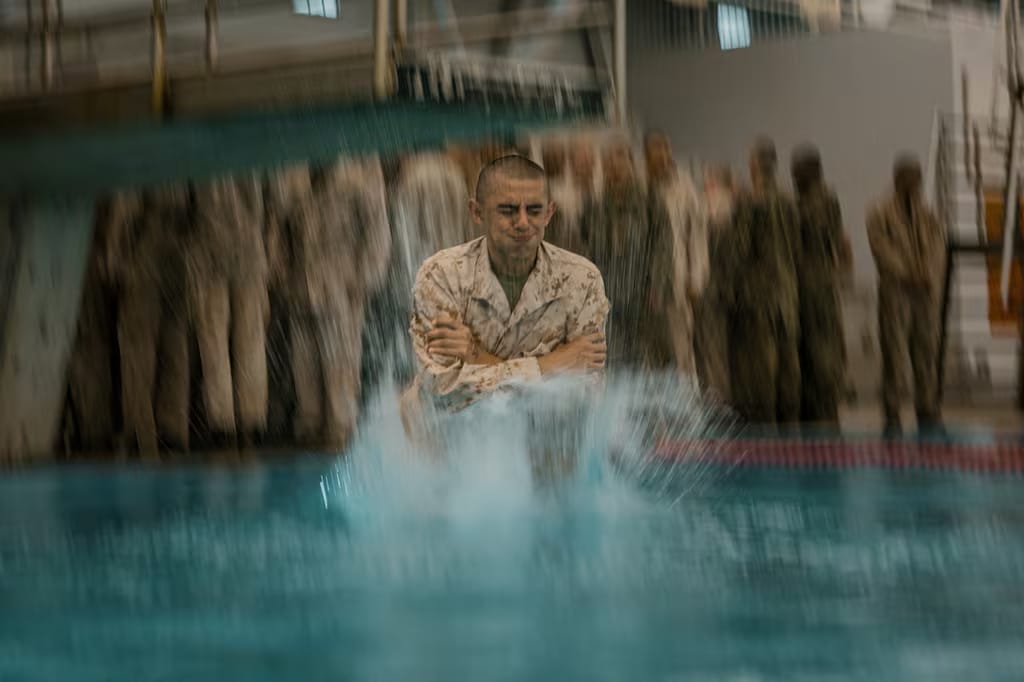
• What Happened: The Marine Corps announced tougher water survival standards, combining swim qualification with underwater egress training and requiring Marines to progress through five increasingly demanding levels starting October 2026.
• Why It Matters: Future conflicts are expected to unfold in maritime environments, and Marine leaders want a force that is not just basically qualified in water — but confident, capable, and continuously improving.
• Bottom Line: The Corps is raising the bar in the pool now to avoid failure in open water later.
The Marine Corps plans to overhaul its water survival training by combining traditional swim qualification with underwater egress training, a move that will result in more demanding swim tests for Marines across the force.
According to guidance released in a Marine Administrative Message, or MARADMIN, on March 6, the new training standards will take effect beginning Oct. 1, 2026.
The changes are intended to improve operational readiness and strengthen Marines’ capabilities in maritime environments while also increasing individual confidence in the water, according to the service.
Maj. Hector Infante, communications director for Marine Corps Training and Education Command, said the updated system introduces a more structured training approach that encourages Marines to continually develop their aquatic skills throughout their careers.
“While basic water survival skills are introduced during recruit training, the new order places a strong emphasis on continuous training and qualification opportunities for Marines throughout their careers,” Infante said in a statement.
Marine leaders have been evaluating ways to improve swimming proficiency across the force for several years. Military officials have been studying potential improvements to water survival training since at least 2022.
Under the updated standards, Marines will qualify under five different water survival levels: Basic, Novice, Competent, Proficient and Advanced.
The Basic level will be reserved for recruits who complete the initial swim qualification during boot camp. That test requires recruits to jump from a 10-foot tower into a pool, tread water for four minutes and swim 25 meters while wearing combat gear.
After completing recruit training, Marines will be required to qualify at the Novice level or higher unless they receive an official exemption. Marines who fail to meet the requirement could face administrative counseling.
Each level introduces progressively more demanding requirements. Infante said the time Marines must tread water increases as they advance, and they must demonstrate additional swimming techniques at higher qualification levels.
Basic and Novice levels require demonstrating proficiency in a single stroke. Marines seeking Competent qualification must demonstrate two strokes, while Proficient requires three.
The highest level, Advanced, requires Marines to demonstrate proficiency in four strokes: the front crawl, breaststroke, sidestroke and backstroke.
“The goal is for every Marine to consistently improve their aquatic skills whenever possible,” Infante said.
The updated standards will also be incorporated into official performance evaluations through both the Junior Enlisted Performance Evaluation System and the Marine Corps’ broader Performance Evaluation System.