

The Interview That Should Keep Every Mullah Awake Tonight
- What Happened: Secretary of War Pete Hegseth sat down with CBS News chief Washington correspondent Major Garrett for an extended 60 Minutes interview, laying out the strategic logic of Operation Epic Fury, defining what unconditional surrender looks like in 2026, and delivering a message to Iran that was impossible to misread.
- Why It Matters: Iranian missile shots are down 90%. Their navy is largely gone. 3,000 targets struck. And Hegseth made clear this campaign bears zero resemblance to Iraq or Afghanistan. No nation-building. No exit timelines. No limits disclosed to anyone.
- Bottom Line: "This is only just the beginning." Those are not talking points. That is a promise.
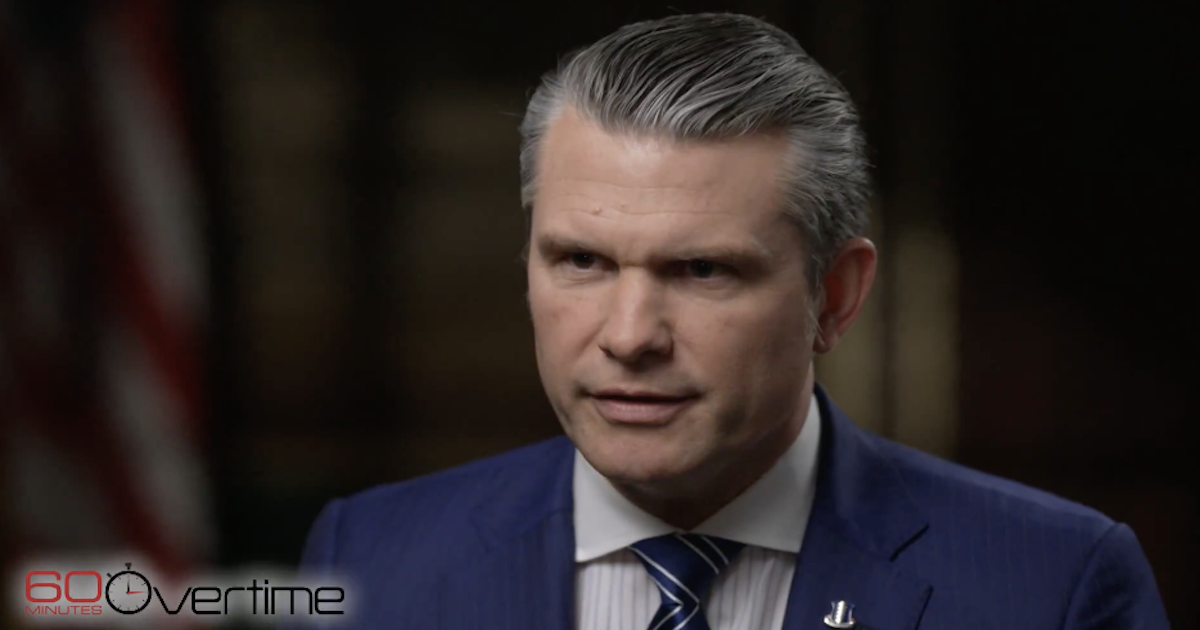
Pete Hegseth walked into a 60 Minutes interview with CBS News chief Washington correspondent Major Garrett and did something Washington almost never does anymore. He told the truth.
The U.S. military had already struck 3,000 targets inside Iran when they sat down on Friday, March 6. More than 50,000 American service members are executing Operation Epic Fury alongside the Israeli Defense Forces. And Hegseth was unambiguous about where this is heading.
On surrender, he was surgical. "Whether they want to admit it or not, whether their pride lets them say it out loud or not, it's President Trump who will set the terms," Hegseth said. "We'll know when they're not capable of fighting. There'll be a point where they'll have no choice. Whether they know it or not, they will be combat-ineffective. They will surrender."
CBS News chief Washington correspondent @MajorCBS sat down with Defense Secretary Pete Hegseth in Washington, D.C. They spoke on Friday, March 6th about the state of the war with Iran, potential American casualties, what an Iranian surrender could look like, and more.
— 60 Minutes (@60Minutes) March 9, 2026
Editor's… pic.twitter.com/JRnKcYs5IY
When Iran's president declared that American demands were "a dream that they should take to their grave," Hegseth did not flinch.
On the Iraq and Afghanistan comparisons that the media keeps reaching for, Hegseth demolished them with his own service record as the foundation. "I watched Americans thinking we were gonna remake a society that was basically biblical times with AK-47s and cellphones," he said. "The hubris of, we're gonna take Afghanistan and turn it into a Jeffersonian democracy by building western-style forces and western-style institutions. It was never gonna work." This, he made clear, is nothing like that.
On Russia sharing intelligence with Iran, Hegseth was calm and pointed. "We're aware of who's talking to who, why they're talking to them, how accurate that information might be, how we factor that into our battle plans." The message to Moscow was delivered without raising his voice.
On casualties, he wore his memorial bracelet and spoke plainly. "That doesn't weaken us one bit. It stiffens our spine and our resolve to say this is a fight we will finish."
On timelines, limits, and options, he said exactly what he should say. Nothing.
Iranian missile shots are down 90 percent. Their navy is largely no more. And Hegseth closed with the line Iran's new leadership needs to read twice. "This is only just the beginning."