

There is a version of baseball that exists in giant stadiums with retractable roofs, luxury boxes, and ticket prices that require a short financial planning meeting before checkout.
And then there is Minor League Baseball.
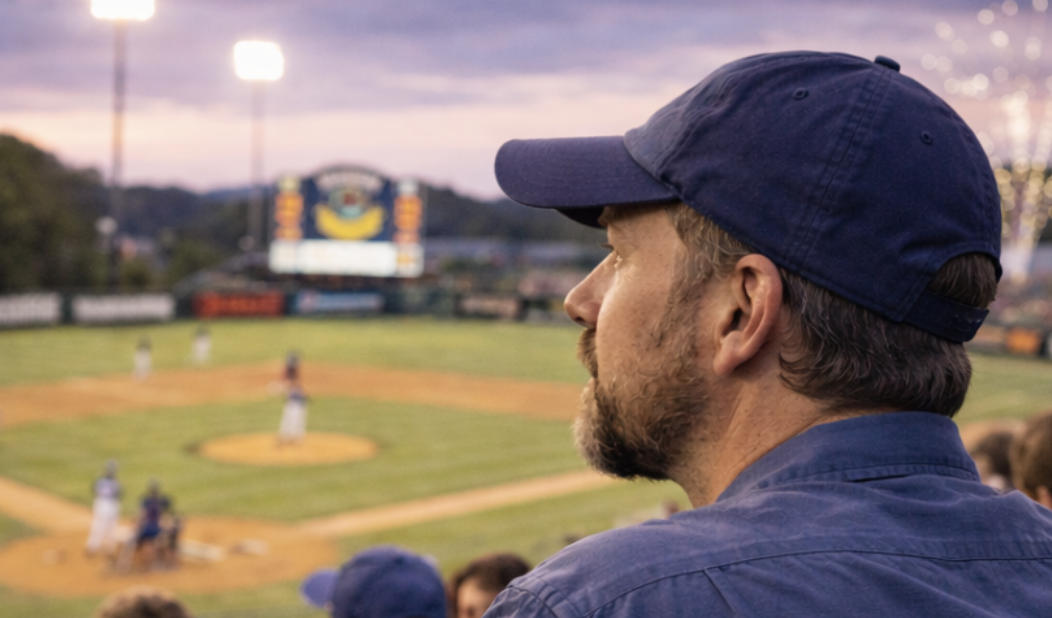
If you have never sat in a minor league ballpark on a warm evening with a hot dog in one hand and absolutely no expectation that you are witnessing history, you are missing the purest form of the sport.
Major League Baseball is impressive. It is polished. It is elite. It is also $38 to park your car.
Minor league baseball is $9 to get in, $3 to park if anyone even bothers charging, and a mascot who looks like he was approved after someone said, “Sure, why not, it’s a salamander.”
When you go to a big-league game, you feel like a consumer.
When you go to a minor league game, you feel like you wandered into a community cookout that just happens to involve a 6–4–3 double play.
The seats are close. Not “technically close if you squint” close. I mean you can hear the third baseman mutter something under his breath close. You can smell the infield dirt. You can identify the exact moment the pitcher loses command because you can see it in his shoulders.
Try doing that from the upper deck in a major league stadium where the players resemble well-organized ants.
And then there’s the pricing.
At a major league park, you buy a soda and it feels like you just made a down payment on something.
At a minor league park, you buy a soda and the person handing it to you says, “You want a lid?” like this is still a functioning society.
The promotions are also superior.
Major League Baseball: “Corporate Night Sponsored by a Bank.”
Minor League Baseball: “Bring Your Dog Night, Fireworks, and If the Pitcher Hits the Mascot With a T-Shirt Cannon Everyone Gets a Free Hat.”
There is joy in that chaos.
The players are different too. In the majors, you are watching established stars, which is wonderful. In the minors, you are watching possibility. Every kid out there believes he’s one good month away from a call-up. Every inning feels like an audition.
You’re not just watching a game. You’re watching careers try to happen.
And the atmosphere is gloriously unpretentious. No one is debating advanced metrics in the concession line. The guy behind you is explaining the infield fly rule to his nephew with the confidence of someone who may or may not fully understand it himself.
You can move around. You can sit wherever there’s space. You can actually follow the game without watching it on a 60-foot screen because you are close enough to see it with your eyes.
And let’s talk about the seventh-inning stretch.
At a major league game, it’s a coordinated multimedia event.
At a minor league game, someone hands a microphone to a local radio host and hopes for the best.
It’s beautiful.
You also leave without feeling financially mugged.
There is something deeply satisfying about watching nine innings of baseball, eating two hot dogs, buying a souvenir for a kid, and still having enough left over to stop for ice cream on the way home without conducting an internal audit.
Minor League Baseball is baseball stripped back down to its bones: dirt, grass, wood bats, and people who genuinely seem happy you showed up.
There are no velvet ropes. No VIP sections guarded like embassy property. Just families, retirees, teenagers on first dates, and a mascot that looks like it was brainstormed in under five minutes.
And that’s why it’s the best way to watch baseball in person.
It’s not about prestige.
It’s about proximity.
It’s about affordability.
It’s about the fact that when a foul ball comes your way, it feels like an event — not a liability waiver.
Major League Baseball is impressive.
Minor League Baseball is fun.
And if I’m choosing between feeling like a line item in a revenue report or feeling like part of the crowd, I’ll take the salamander mascot and the $3 parking every time.