

Pentagon Tests Backpack Cyber Battle System
Patriot Brief
• Massachusetts Air Guard deploys backpack-sized cyber training platform for flexible readiness.
• ACTE bypasses traditional cyber lab infrastructure, accelerating squadron-level innovation.
• Spark Tank–backed system supports joint exercises and drone image analysis.
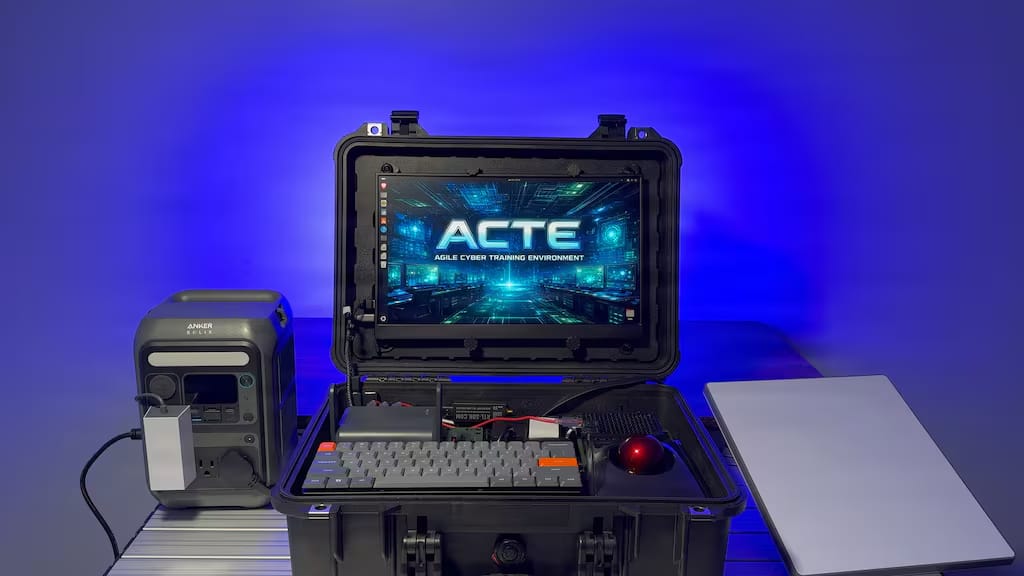
A portable cyber warfare training platform small enough to fit inside a backpack is now being used by members of the Massachusetts Air National Guard, offering a more flexible way to prepare for emerging digital threats.
Known as the Agile Cyber Training Environment, or ACTE, the system was developed by Senior Master Sgt. Taylor Gow and recently accepted into the U.S. Air Force Spark Tank 2026 initiative. Spark Tank is an annual competition that allows Air Force and U.S. Space Force personnel to present innovative ideas directly to senior leadership.
Gow designed ACTE to address a longstanding challenge in cyber training: access. Traditional cyber ranges and laboratory environments often require significant infrastructure, formal approval processes, and enterprise-level connectivity. That can slow down training cycles and limit the ability to respond quickly to evolving threats.
“Traditional cyber ranges and lab environments require significant infrastructure, formal approval processes and/or enterprise connectivity,” Gow said in a statement. “This creates delays and limits how quickly we can innovate or train on emerging threats.”
The ACTE platform is intended to remove those barriers. Portable and relatively affordable to produce, the system allows airmen to conduct both defensive and offensive cyber exercises outside fixed facilities. According to the Air National Guard, it supports a wide array of training simulations and can operate in diverse environments.
Gow has already used the system in joint training alongside Army, Air Force, and law enforcement personnel working with the Massachusetts Cyber Incident Response Team. In addition to cyber tactics, the platform has supported photogrammetry functions, processing images captured by drones to enhance operational awareness and analysis.
The portability of the ACTE system is expected to increase available training hours, particularly at the squadron level. By reducing reliance on centralized infrastructure, units can conduct exercises more frequently and with fewer logistical hurdles.
“The ACTE was designed by an Airman, for Airmen,” Gow said. “This platform is intended to provide an environment to test, train and develop at the squadron level.”
The initiative builds on the Massachusetts National Guard’s growing role in cyber operations. In recent years, guardsmen have participated in international cyber exercises, including deployments to Paraguay and Israel to train alongside allied forces.
As cyber threats continue to evolve and expand across military and civilian sectors, officials have emphasized the need for adaptable, accessible training tools. Systems like ACTE reflect a broader effort to decentralize innovation within the force, allowing service members to develop practical solutions tailored to operational needs.
Whether or not the project advances further through the Spark Tank process, it has already demonstrated how field-driven innovation can reshape the way cyber forces prepare for real-world challenges.
Source: Military Times