

82nd Airborne Elements Deploy to Middle East as Pentagon Adjusts Force Posture
Patriot Brief
• What Happened: The Pentagon confirmed elements of the 82nd Airborne Division, including its 1st Brigade Combat Team, are deploying to the Middle East under U.S. Central Command.
• Why It Matters: Moving one of America’s most rapid-response units into the region signals heightened readiness as tensions with Iran rise and regional stability remains uncertain.
• Bottom Line: The U.S. is strengthening its military posture in the Middle East — a clear signal of deterrence without formal escalation.
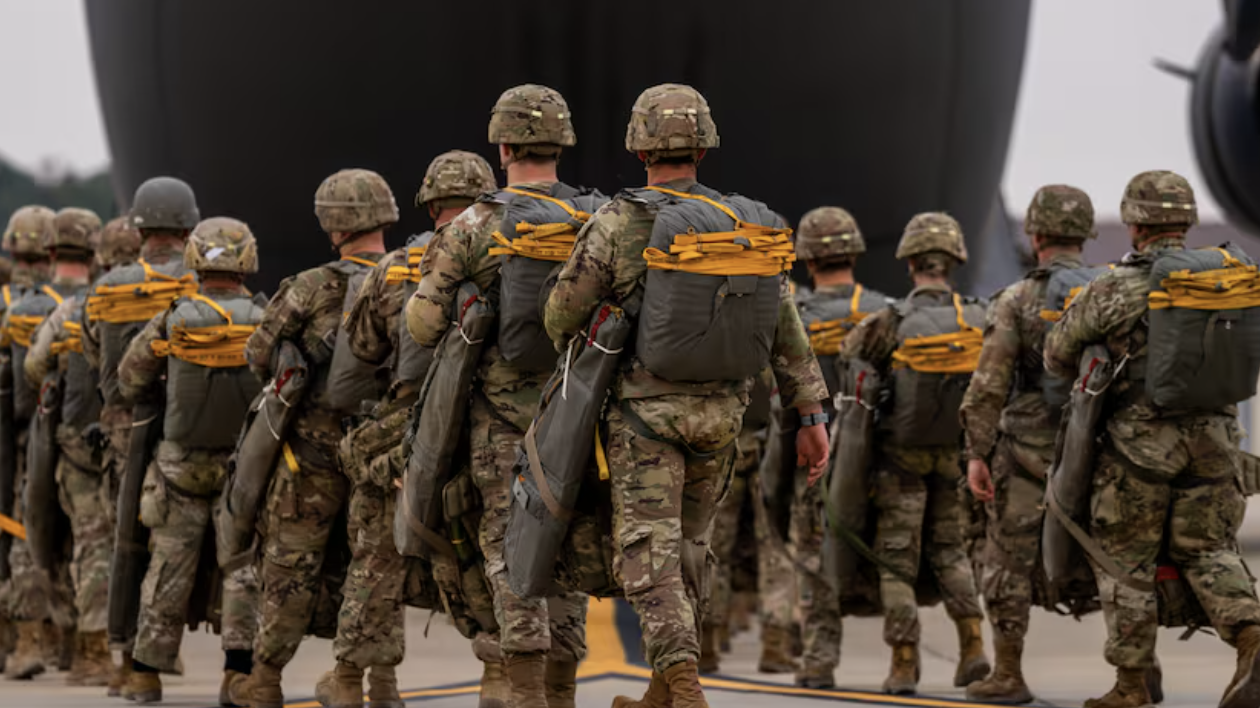
The U.S. Department of Defense has confirmed that select components of the 82nd Airborne Division are being sent to the Middle East, marking the latest adjustment to America’s military posture in the region.
According to officials, the deployment includes elements of the division’s command structure, supporting units, and the 1st Brigade Combat Team. The movement will fall under the operational control of U.S. Central Command, which oversees U.S. military activity across the broader Middle East.
Defense officials offered only limited details, emphasizing that specifics surrounding troop numbers, timelines, and mission scope are being withheld for security reasons. The lack of detail is consistent with standard practice when rapid-response units are positioned in sensitive or evolving situations.
The deployment comes at a time when U.S. leaders are reassessing their military footprint in response to increasing friction with Iran. While no direct conflict has been announced, the repositioning of forces suggests a focus on deterrence and readiness as regional dynamics remain uncertain.
Recent reporting by The New York Times indicated that the number of troops involved could reach into the thousands, though the Pentagon has not confirmed those figures. The move follows earlier reinforcements to the region, including the dispatch of the USS Boxer and additional naval personnel.
Based at Fort Bragg, the 82nd Airborne Division is widely regarded as one of the military’s most responsive units, capable of deploying on short notice to hotspots around the globe. Its presence is often used to stabilize situations quickly or signal U.S. commitment during periods of uncertainty.
With U.S. Central Command responsible for operations spanning Iraq, Syria, and the Gulf region, the arrival of additional airborne forces reinforces the United States’ ability to respond rapidly to any developments. Officials have not indicated whether further deployments are being considered.