Abu Zubaydah, long held by the United States without charges, appeared Thursday for a Periodic Review Board hearing at the U.S. military prison at Guantanamo Bay, Cuba, according to reporting adapted from the Associated Press. The roughly 20-minute session produced no immediate ruling on whether to approve him for transfer after two decades at the facility.
The core dispute: risk vs. release
A U.S. government official said Zubaydah had “probably” served as one of Osama bin Laden’s most trusted facilitators. Zubaydah’s government-assigned representative and his private attorney, Annika Conrad, acknowledged he knew bin Laden but argued he was never an al-Qaida member and poses no security threat to the United States.
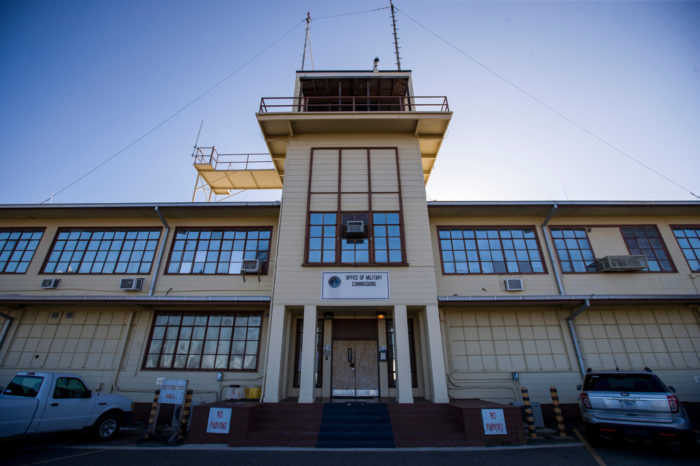
Conrad urged the board to approve a transfer, saying Zubaydah would accept stringent measures, including continuous monitoring, and has family support. She said a chief military prosecutor for the U.S. Military Commissions has indicated it is unlikely Zubaydah will be charged. The Office of Military Commissions declined to comment.
What the board can do
The Periodic Review Board—created under the Obama administration and composed of senior defense, intelligence, and homeland security officials—assesses whether detainees can be released without endangering national security. Approval would start a multiyear process to identify a country willing to accept him.
Reporters at Fort Meade, Maryland, viewed a live feed of the unclassified portion. Detainees do not speak at these hearings; Zubaydah sat beside his attorney and a government representative. He wore a gray suit jacket and patterned gray tie.
Torture history documented; injuries alleged
Zubaydah was captured in Pakistan in 2002 and held at CIA “black sites” before his 2006 transfer to Guantanamo. A Senate report found he was waterboarded more than 80 times in one month and confined for over 11 days in a coffin-size box, among other treatment now widely regarded as torture. The European Court of Human Rights has said he was held in CIA facilities in Poland and Lithuania.
Conrad described him as “a greatly injured man,” alleging he lost his left eye, can no longer write in English, and struggles to recall words. His attorneys said he has rejected extremist views and “simply wants to live a life of peace.”
Shifting U.S. assessment and legal fallout
While Zubaydah was initially portrayed as a high-ranking al-Qaida figure, the U.S. later dropped the claim that he was among the group’s most senior leaders, according to the AP report. He is 55, a Palestinian born in Saudi Arabia, and, per the reporting, is still regarded by the U.S. as a security risk.
In 2022, the U.S. Supreme Court dismissed Zubaydah’s bid to secure testimony from two former CIA contractors about his treatment in Poland, accepting the government’s assertion that it would expose state secrets. In January, attorney Helen Duffy said the British government agreed to pay a “substantial sum” to settle a lawsuit alleging U.K. intelligence complicity in his torture. A 2018 British parliamentary committee report found U.K. services knew he was being tortured and continued to provide questions to the CIA without seeking assurances about his condition.
What’s next
The review panel did not announce a decision. If cleared, Zubaydah’s transfer would require security arrangements with a receiving country. If not, he remains among 15 men still held at Guantanamo Bay under the Military Commissions system.
Attorneys Annika Conrad and Ahmed Almudallal said ahead of the hearing that “for the first time in over two decades, the military’s Chief Prosecutor believes it is unlikely our client will ever be charged,” and argued that this “major change in circumstances” warrants clearing him for transfer. They added: “Twenty-four years in prison plus being ‘patient zero’ in the US government’s torture program has been punishment enough.”
Reporting adapted from the Associated Press; additional details reflect statements by U.S. officials, defense attorneys, a Senate report, the European Court of Human Rights, and a British parliamentary committee, as cited in the source.