New York City officials are moving ahead with a $4 billion plan to rehabilitate a deteriorating stretch of the Brooklyn-Queens Expressway, but one major question remains unresolved: where the money will come from.
According to reporting by Christen Smith of The Center Square, Zohran Mamdani and New York City Department of Transportation Commissioner Mike Flynn announced Monday that the city will repair the section of the BQE between Atlantic Avenue and Sands Street.
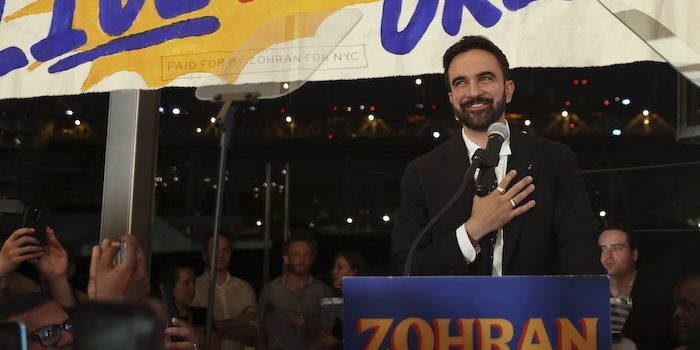
The project is intended to extend the life of that portion of the highway by roughly 40 years, officials said.
A costly repair for an aging expressway
In a video announcement, Mamdani said the city would repair aging concrete, address the deteriorating triple cantilever and build temporary roads to keep traffic moving during construction.
“The cost of inaction is too high, and the risks to New Yorkers are too important to delay any longer,” Mamdani said.
The 70-year-old expressway, associated with controversial urban planner Robert Moses, is about 20 years beyond its design life, city officials said. The stretch carries about 130,000 vehicles per day — more than twice its intended capacity, according to officials cited by The Center Square.
Officials warn delay could push traffic into neighborhoods
Flynn said the city can no longer postpone major work on the roadway.
“Time is up,” Flynn said Monday. “After decades of kicking the can down the road and indecision that failed to yield substantial results, we will act with urgency to rehabilitate the City’s portion of the BQE to ensure the safety of New Yorkers and minimize the likelihood of massive traffic diversions into Brooklyn neighborhood.”
Deputy Mayor for Operations Julia Kerson warned that without “significant rehabilitation,” the central section would keep weakening and more cars and heavy trucks could be forced onto local streets. She also said freight networks could be disrupted and costs could continue to rise.
Federal money is not part of the plan
The administration said it will not seek federal funding for the 10-year project, which is expected to break ground in 2030, according to The Center Square.
However, officials did not identify a state funding source to cover the estimated $4 billion overhaul. The city said the plan is meant to keep the structure safe and stable while it works with the state, which controls the northern and southern sections of the highway, on a long-term vision for the corridor.
“For decades, prior administrations have been trying to figure out a way to address the urgently-needed repairs to the BQE,” Mamdani said. “Every year we don’t do something about the BQE, it costs the city $160 million.”