The message from the Florida company was firm. It did not negotiate with hackers. It did not pay ransoms. It had its own tools, it said, to unlock a client’s files.
Prosecutors say that was a lie. And in June 2026, the FBI set out to prove it by playing both sides of the deal at once.
On November 25, the Justice Department announced that a federal grand jury in Rhode Island had charged Juan Ricardo Palacio Escobar, a 52 year old Colombian national, with three counts of wire fraud. An indictment filed November 18 alleges he cofounded a Florida data recovery firm, identified in news reports as RansomwareHelp, that promised a technical fix and then secretly paid the hackers, charging victims far more and keeping the difference.
If convicted, he faces a maximum of 20 years in prison on each count. He has not been convicted of anything. An indictment is an accusation, and he is presumed innocent unless a jury finds him guilty.
What the Company Promised
The company registered in Florida around October 2020, according to the indictment. Palacio was listed as its manager and served as chief technology officer. He and a business partner lived in Colombia and traveled often to the United States.
The firm’s website told potential customers, “Do not pay the ransom!” It warned that paying “does not guarantee safe file recovery and may expose you to further extortion attempts.”
What it offered instead, the indictment says, was “advanced cryptographic tools to restore 100% of data, servers, systems to their original format and integrity.” Brian Krebs of KrebsOnSecurity, who reviewed an archived copy of the site, reported that it also touted a success rate of over 99 percent and a team of 80 experts. TechCrunch later reported the website was listed as under maintenance.
Prosecutors say there was no technical solution. Palacio, they allege, negotiated with ransomware groups, paid for decryption keys, billed clients as if the work were a complex recovery job, and used the proceeds to help buy several properties in Florida.
The Kansas Invoice
One job in the indictment involved a software consulting company in Kansas that had been hit by a ransomware attack. On or about January 11, 2024, that company paid $720,000 to a bank account tied to Palacio, the indictment says, after a company representative told the victim it could recover the network without paying a ransom.
The firm even issued a signed “Recovery Certificate.” It stated that the company had never contacted anyone about a ransom payment, that its experts used proprietary tools “to achieve 100% data recovery, all backed by a success rate of over 99%,” and that “We never promote, intermediate or pay ransom to threat actors on behalf of our clients.”
On or about January 20, 2024, the indictment alleges, Palacio paid the attackers about $445,000 in Bitcoin for the decryption key.
In April 2025, a security company in Rhode Island paid $1,250 for an initial assessment. The Florida firm then sent a proposal claiming it would use 354 “forensic servers” and quoting $314,150 to recover the data. The indictment describes that pitch. It does not say the Rhode Island company paid the larger fee.
The FBI Plays Both Sides
In June 2026, the FBI built a trap around a fake company in Rhode Island and a fake ransomware group. Agents encrypted files on the fake company’s computer and left a ransom note with a unique victim number.
The supposed client told Palacio’s firm it did not want to pay the hackers. The firm, prosecutors say, repeated its line: it did not negotiate and it did not pay. It charged $2,750 for an initial forensic assessment, then connected through a remote access program.
On June 14, according to the indictment, Palacio emailed the supposed attackers, cited the victim number from the ransom note, and asked for the “lowest possible price for the decryptor.” The undercover agent asked for 0.2 Bitcoin, worth about $13,000 at the time.
Two days later, a company representative told the fake client the diagnostic had worked and the cost to unlock the files would be $13,260. The FBI paid it. The next day, Palacio tried to talk the supposed hackers down to $4,000. They settled at $6,000. On June 19, he paid about $6,003 in Bitcoin for the key.
The indictment says the firm collected $16,010 from the undercover client, paid about $6,000, and kept about $10,010.
“As alleged, the defendant preyed on ransomware victims by falsely marketing a solution he did not possess, secretly negotiating with cybercriminals, and profiting from the difference,” said Charles C. Calenda, first assistant U.S. attorney for the District of Rhode Island, in the Justice Department’s announcement.
FBI Boston Special Agent in Charge Ted E. Docks called Palacio “the proverbial wolf in sheep’s clothing,” adding, “Little did they know he was ripping them off.”
Palacio was arrested in Las Vegas on October 22 and transferred to Rhode Island. On November 20, a court released him before trial under strict conditions. Prosecutors have listed multiple Florida properties for possible forfeiture, including places in Miami Lakes, Davenport, Coral Gables and Miami, that they say were funded in part by the scheme.
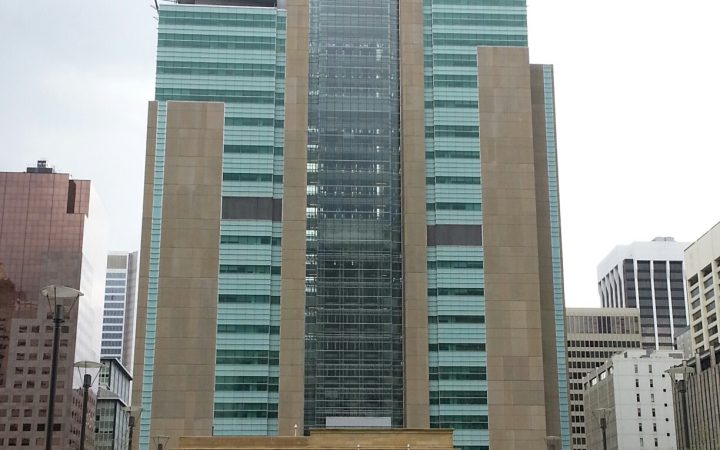
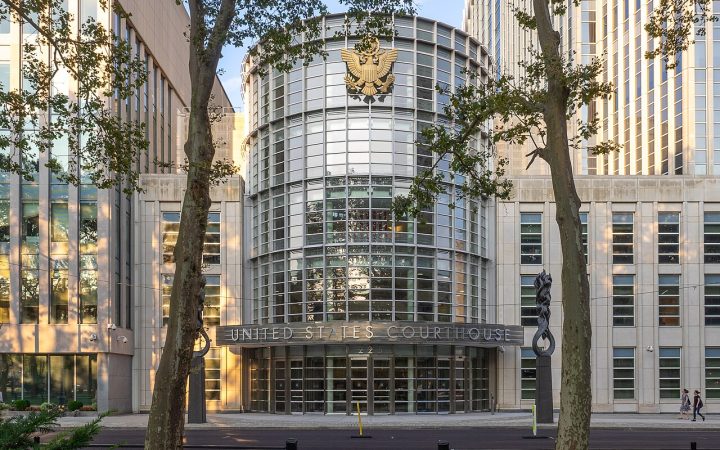
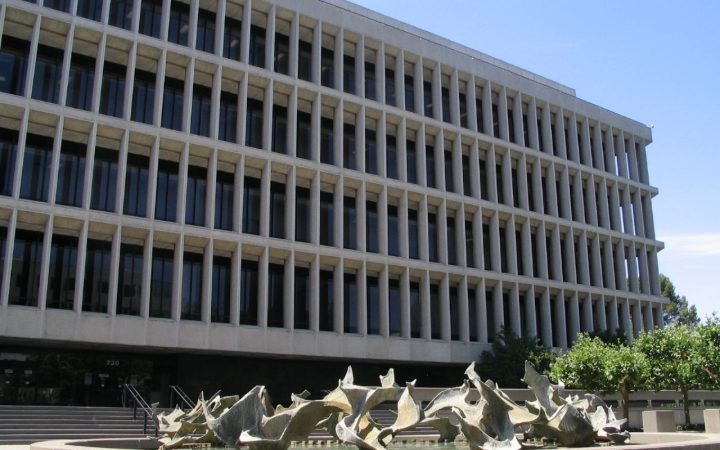
Photo: The Federal Building and United States Courthouse in Providence, Rhode Island. This is a general view of the courthouse, not a photo of anyone in this story. Photo by the General Services Administration, public domain, via Wikimedia Commons.
Sources
- U.S. Department of Justice, press release (November 25, 2026): justice.gov
- Indictment, United States v. Juan Ricardo Palacio Escobar, U.S. District Court for the District of Rhode Island, No. 1:26 cr 00096, filed November 18, 2026: krebsonsecurity.com
- KrebsOnSecurity, company identification and archived website claims (November 20, 2026): krebsonsecurity.com
- TechCrunch, DOJ announcement and website status (November 25, 2026): techcrunch.com
- BankInfoSecurity, indictment date and Kansas figures (November 26, 2026): bankinfosecurity.com
- The Record, arrest and release timeline (November 25, 2026): therecord.media