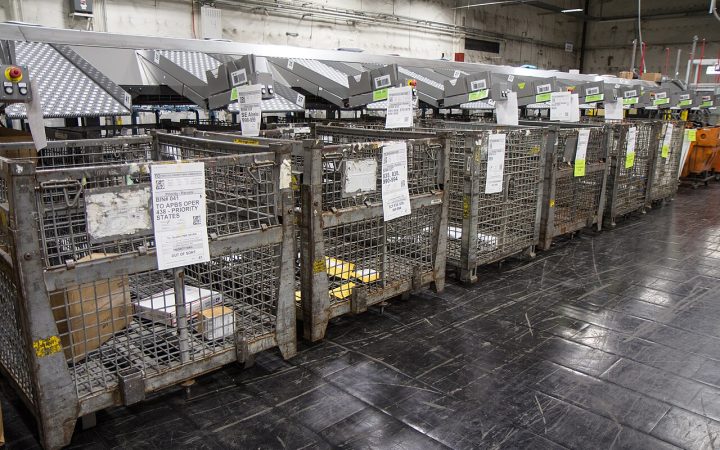
The F-35 is the most expensive weapons program in U.S. military history. The spare parts alone, things like engines and tires, add up to a fortune.
So auditors asked a basic question: can the Pentagon actually account for them?
The answer, in a report released November 9, 2026, was no. Thousands of parts sitting in maintenance or repair had never been entered in the official inventory system at all.
A $31 Billion Pile, and Incomplete Books
The Government Accountability Office found that the F-35 program includes about 26 million parts, valued at about $31 billion, held at more than 700 contractor and government facilities around the world. Those parts belong to the Department of Defense, but the department still does not keep complete records of them, the report says. The GAO called the jet the costliest weapon system in the department’s history.
As of March 2026, the F-35 Joint Program Office had not entered about 17,000 parts into the Enterprise Logistics Management System, the official property system. Those parts were in a maintenance or repair status and had a total value of about $1.3 billion, the report says.
Defense Department officials told the GAO that figure may be as high as $2.5 billion once missing costs and extra expenses such as transportation and overhead are counted. They also said still more parts in for repair might not have appeared in the source document.
The Books Were Months Behind
One reason the records lag is technical. The official system cannot currently talk to the property systems run by the program’s two prime contractors, Lockheed Martin for the airframe and Pratt & Whitney for the engines, the report says.
For the shared pool of spare parts, the program office instead relies on data the contractors turn in every three months. As a result, the GAO found, some of that inventory data may be more than 3 months old.
The office also had not fully developed procedures to check contractor data before loading it into the official system. In a December 2025 submission, only 29 percent of the part records had serial numbers, and only 43 percent had National Stock Numbers, both possible data quality errors, the GAO said.
Almost 6 percent of the records in the same file listed an acquisition cost of one cent or less, another possible error, the report says.
They Paid to Count, and Still Could Not Finish
Since fiscal year 2020, the program office has spent at least $17 million just trying to count the parts in person, the GAO found. The latest of those physical inventories still did not fully confirm that listed parts were actually in place, or that every part had been listed.
A separate problem from an earlier audit had not been cleared up either. In 2023, the GAO reported that a prime contractor had lost more than 1 million F-35 parts, valued at more than $85 million, between 2018 and 2022. As of March 2026, the program office still did not know the status of those losses.
By then, the contractor had submitted about $28 million in later loss reports. The Defense Contract Management Agency found the contractor should be liable for about $6 million. But the program office had not kept a record of outstanding cases, so it could not tell whether those reports included any of the earlier $85 million, the GAO found, as Breaking Defense also reported.
The Department Says It Is Working on It
The GAO made four recommendations, including better monitoring of lost parts and clearer procedures and training for the officials who keep the property records. The Defense Department agreed with all four and said it was taking action, the report states.
A Joint Program Office spokesperson told Breaking Defense the office was “actively working” on new procedures, training and real-time connections between government and contractor systems. The report said that as of July 2026, the office was already testing an interface with one prime contractor.
Until those records are timely and accurate, the GAO warned, the department will not have reliable information about where its F-35 parts are, what they are worth, or how many there are.
Photo: Three F-35 Lightning II variants, Navy, Marine Corps and Air Force, in a training flight near Eglin Air Force Base, Florida, on May 21, 2014. This is a U.S. Air Force file photo, not a photo of the parts described in the audit. U.S. Air Force photo by Staff Sgt. Katerina Slivinske, public domain, via Wikimedia Commons.
Sources
- U.S. Government Accountability Office, GAO-27-108713, “F-35 Program: DOD Needs to Strengthen Oversight of Tens of Billions of Dollars in Parts” (November 9, 2026): gao.gov
- Defense News (Michael Peck, November 10, 2026): defensenews.com
- Breaking Defense (Mikayla Easley, November 9, 2026): breakingdefense.com